What is FDM (fused deposition modeling) 3D printing?
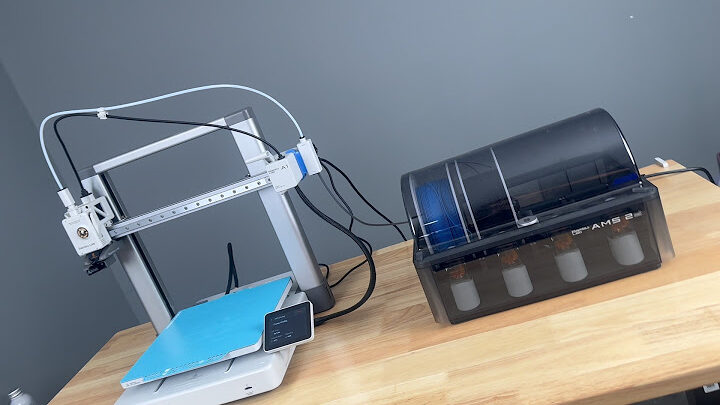
Fused filament fabrication, often called FFF, is one of the most widely used forms of 3D printing. It works by feeding a thermoplastic filament through a heated nozzle, melting the material, and depositing it layer by layer onto a build platform. As each layer cools and solidifies, it bonds with the layer below, gradually forming a complete three-dimensional object.
FFF is popular because it is relatively affordable, accessible, and versatile. It is used by hobbyists, educators, engineers, and manufacturers to create prototypes, tools, models, fixtures, and functional parts.
Materials and Applications
A key advantage of FFF is the wide range of materials available. Common filaments include PLA, ABS, PETG, TPU, nylon, and carbon-fibre-reinforced polymers. Each material has different properties. For example, PLA is easy to print and suitable for visual models, while nylon and reinforced composites are often chosen for stronger, more durable parts.
FFF is especially useful for rapid prototyping because designs can be produced quickly and modified easily. It is also used in low-volume manufacturing, laboratory equipment, teaching demonstrations, customised components, and product development.
Benefits and Limitations
FFF offers several benefits, including low material cost, simple operation, and the ability to create complex shapes without expensive tooling. It also allows users to test ideas quickly before committing to mass production.
However, FFF has limitations. Printed parts often show visible layer lines, and their mechanical strength can depend strongly on print direction, layer bonding, and printing parameters. Surface finish and dimensional accuracy may also be lower than those achieved with some other additive manufacturing methods.
Despite these challenges, fused filament fabrication remains one of the most practical and widely adopted 3D printing technologies. Its balance of affordability, flexibility, and ease of use makes it an important tool in modern design, engineering, and manufacturing.