Plagiarism Assessments: A Vital Step Before Journal Submission
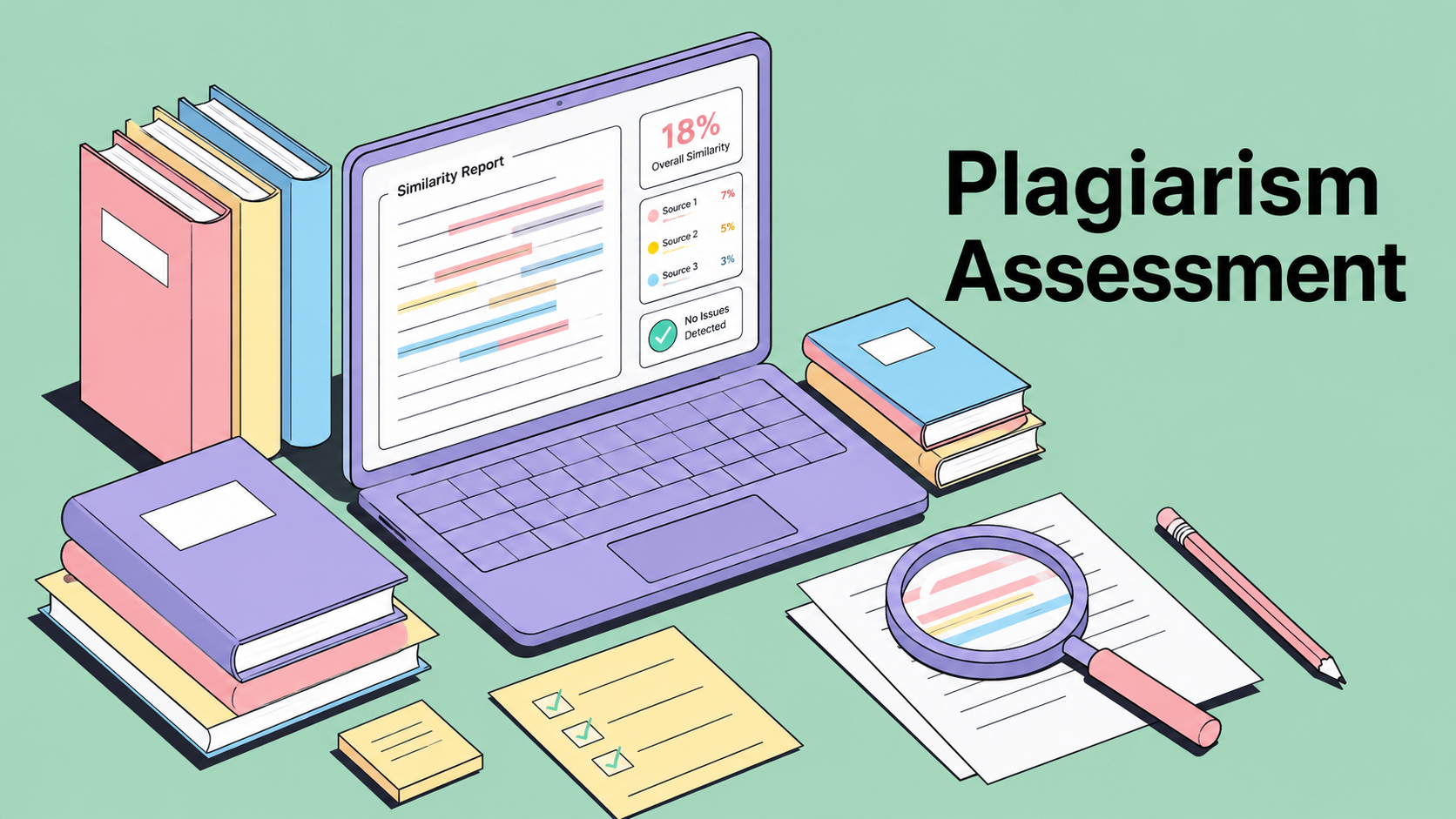
Before submitting a manuscript to a journal, authors should ensure that their work is original, properly referenced, and free from problematic text overlap. A plagiarism or similarity assessment helps identify sections that may closely match previously published sources, including journal articles, conference papers, theses, web pages, and earlier work by the same author.
This is not only about avoiding deliberate plagiarism. In many cases, high similarity can arise unintentionally through repeated technical phrases, reused methodology descriptions, insufficient paraphrasing, or missing citations. Checking a manuscript before submission allows authors to address these issues early and protect the integrity of their research.
Reducing the Risk of Rejection
Many reputable journals screen submitted manuscripts using similarity-checking tools before peer review. If a manuscript shows excessive overlap, unclear attribution, or potential self-plagiarism, it may be returned to the authors or rejected before the scientific content is fully assessed.
Conducting a plagiarism assessment before submission gives authors the opportunity to revise overlapping text, improve citation accuracy, and ensure that reused content is properly acknowledged. This can strengthen the manuscript and reduce the risk of delays, editorial concerns, or reputational damage.
Supporting Research Integrity and Publication Quality
A similarity report should be interpreted carefully. A percentage score alone does not automatically prove plagiarism; context matters. Some overlap may be acceptable in references, standard terminology, methods, or properly quoted material. However, large blocks of matching text, unattributed copying, or excessive reuse of previously published work can raise serious ethical concerns.
By reviewing a similarity report before journal submission, authors can improve transparency, strengthen academic writing, and demonstrate a commitment to responsible publication practice. This step supports both the credibility of the manuscript and the wider standards of scholarly communication.
Our iThenticate Assessment Service
We provide professional plagiarism and similarity assessment services using iThenticate by Turnitin, an internationally recognised tool trusted by publishers, researchers, and academic institutions. iThenticate helps identify text similarity across extensive scholarly and online databases, allowing authors to review and improve their manuscripts before journal submission.
Our service supports researchers by providing a clear similarity report and guidance on areas that may require attention before the manuscript is sent to journals for consideration for publication.